Home EV Charger Installation in Las Vegas: Costs, Types, and What You Need to Know (2026 Guide)
Why Your Standard Outlet Isn't Cutting It
Did you just bring home a new EV only to realize that charging at home is slower than a desert tortoise? Plugging into a standard 120V wall outlet (Level 1) only gives you about 3–5 miles of range per hour.
If you have a 30-mile commute, you're looking at 10 hours of charging just to break even. Fortunately, there are much faster solutions available that turn your garage into a "fueling station" while you sleep.
Level 1 vs. Level 2: The Drip System vs. The Garden Hose
Home charging typically falls into three categories. Here is how they stack up:
| Feature | Level 1 (Standard Outlet) |
Level 2 (240V Outlet) |
Level 2 (Hardwired) |
|---|---|---|---|
| Voltage | 120V | 240V | 240V |
| Amperage | 15-20 Amps | 20-40 Amps | 20-100 Amps |
| Charging Speed | 3–5 miles per hour | 25–35 miles per hour | 25–60+ miles per hour |
| Best For | Emergency or Low Mileage | Daily Driving | Multiple EVs & Fastest Charge |
| Professional Install? | No | Recommended | Yes |
| Cost | $0, use existing outlet | $250-500 typically | $750-2500 typically |
The Hidden Danger of 240V outlets: Just because it fits, doesn’t mean it’s safe
Many Las Vegas garages already have a 240V outlet or homeowners install one themselves. Do not simply plug your car into an old outlet without an inspection.
Standard 240V outlets aren't usually built for the "Continuous Duty" an EV requires. A dryer runs for 45 minutes; an EV pulls maximum power for 8 hours straight.
The Fire Risk: Non-EV-rated outlets can melt or catch fire under sustained high load and heat.
The Solution: If you want a plug-in Level 2, we install Industrial-Grade/EV-Rated outlets. They feature thick copper internals designed to handle the constant power draw without breaking a sweat. They’ll typically have an icon of a car with a plug on it.
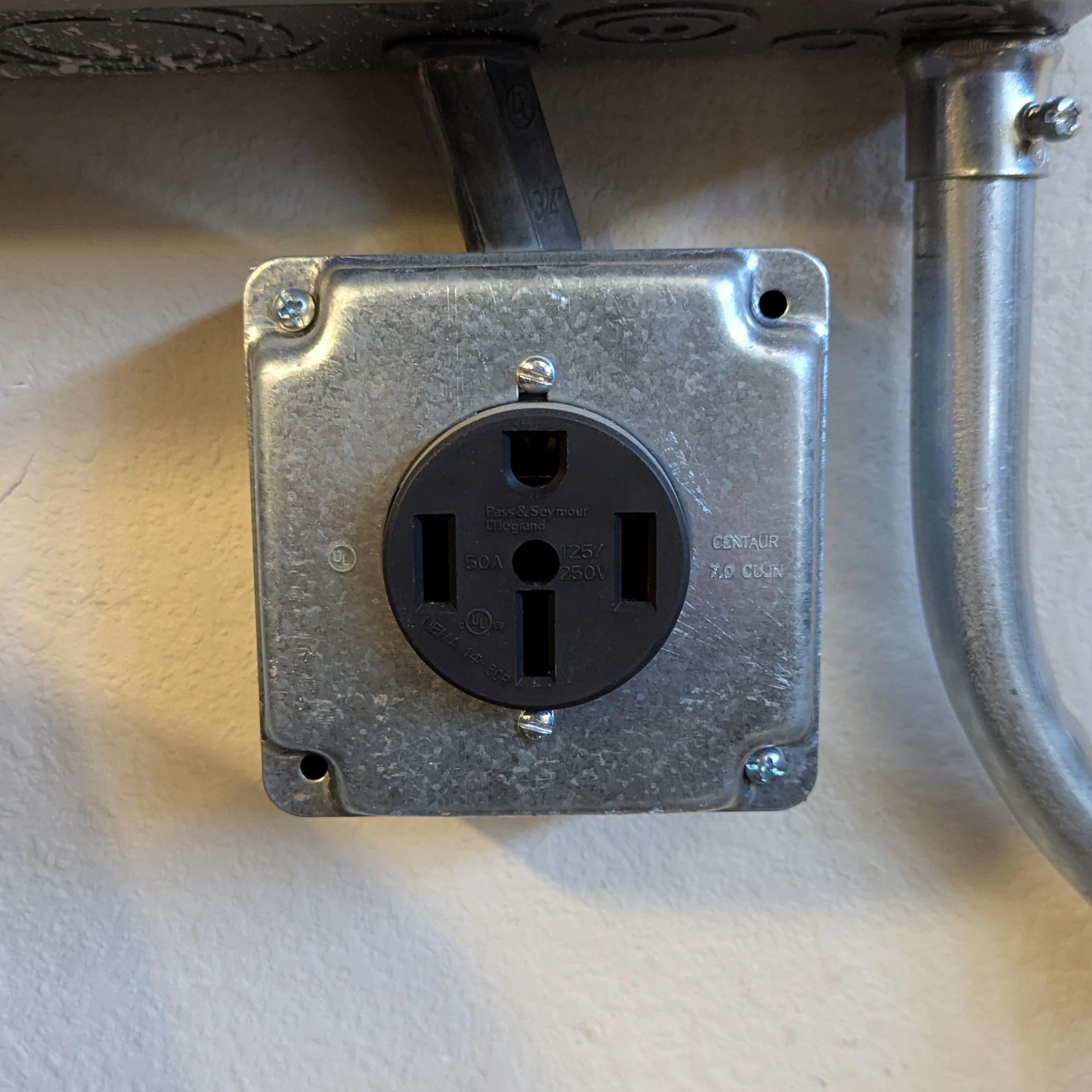
This is a 240V outlet not specifically rated for EV Charging.
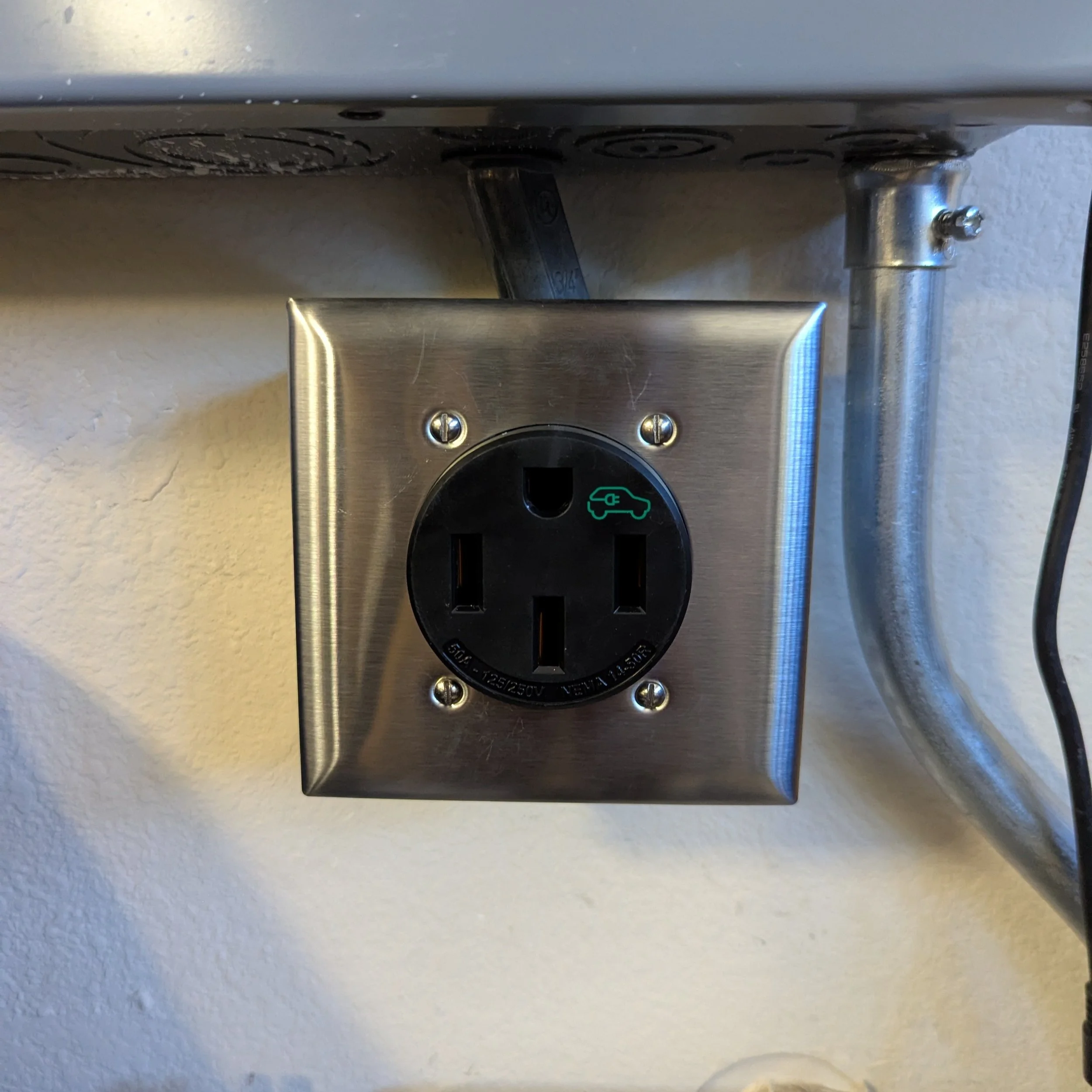
This is a 240V outlet specifically built and rated for EV Charging.
Why Hardwired Chargers Are the 2026 Standard
While plug-in chargers are cheap and convenient, Hardwired Level 2 chargers are the gold standard for three reasons:
Extreme Speed: Plug-in chargers max out at around 30-40 Amps. A hardwired unit (like the Tesla Universal Wall Connector or Enphase) can go up to 80 or 100 Amps, potentially doubling or tripling your charging speed.
Solar-Only Charging: With NV Energy prices rising, and demand charges coming soon avoiding any grid costs are important. We can configure your hardwired charger to only use excess power from your solar panels. You’re essentially driving on sunshine for $0.00 per mile.
Power Sharing: If you have multiple EVs or want a charger in the garage and one outside, they can be connected to the same breaker, and power will be shared between them based on what’s plugged in and how much power each car needs.
Electrical Panel upgrade avoidance: Many electrical panels in Las Vegas are maxed out and either don’t have space physically, or electrically to add a large load like an EV Charger. But with a hardwired charger we can configure them with energy meters that see how much power is currently running through your electrical panel and adjusts the EV charger to only use the extra available. This can give you maximum EV charging potential without spending thousands of dollars to upgrade your panel.
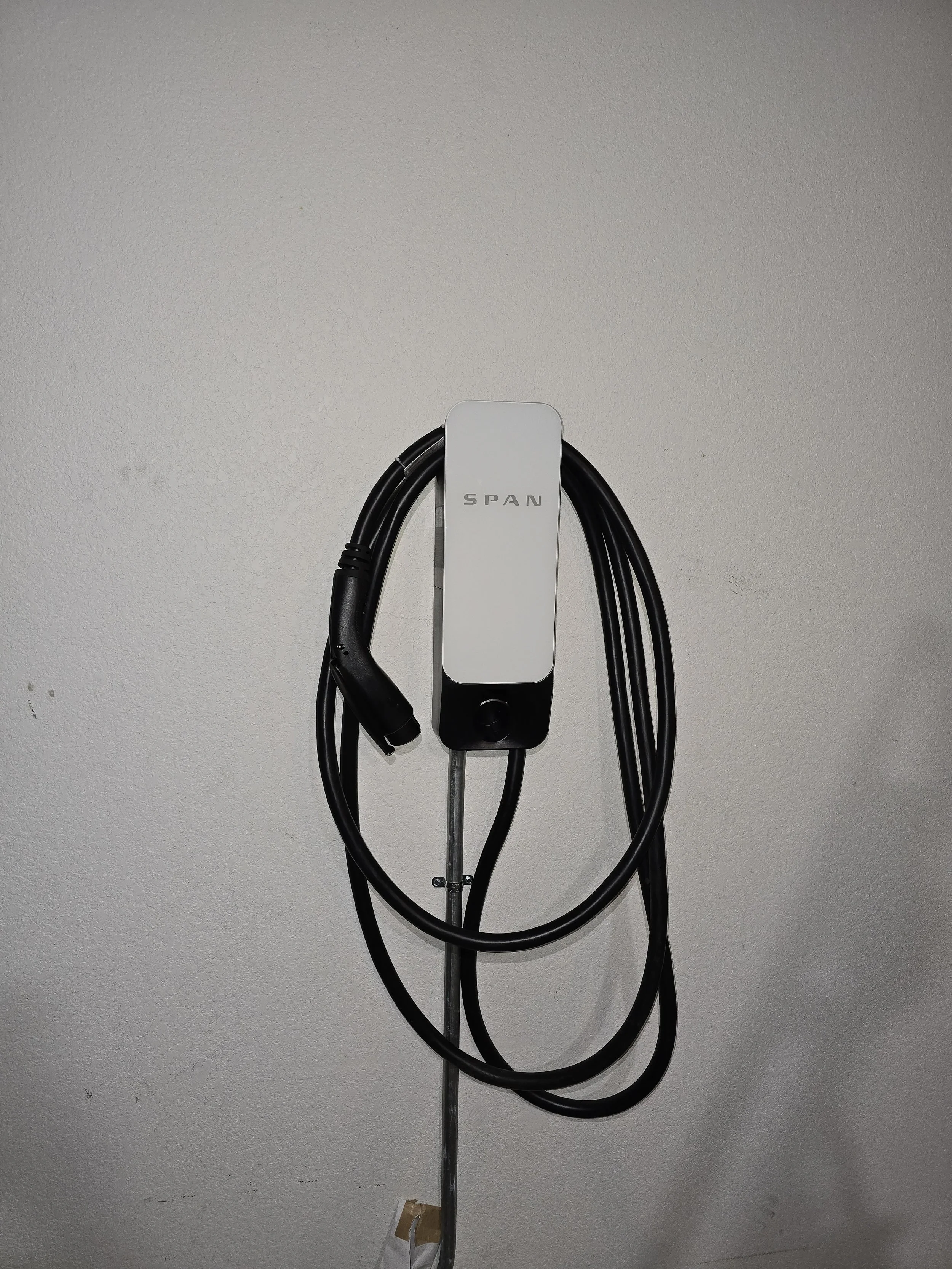
A SPAN EV Charger, connected with the homeowners SPAN Smart electrical panel
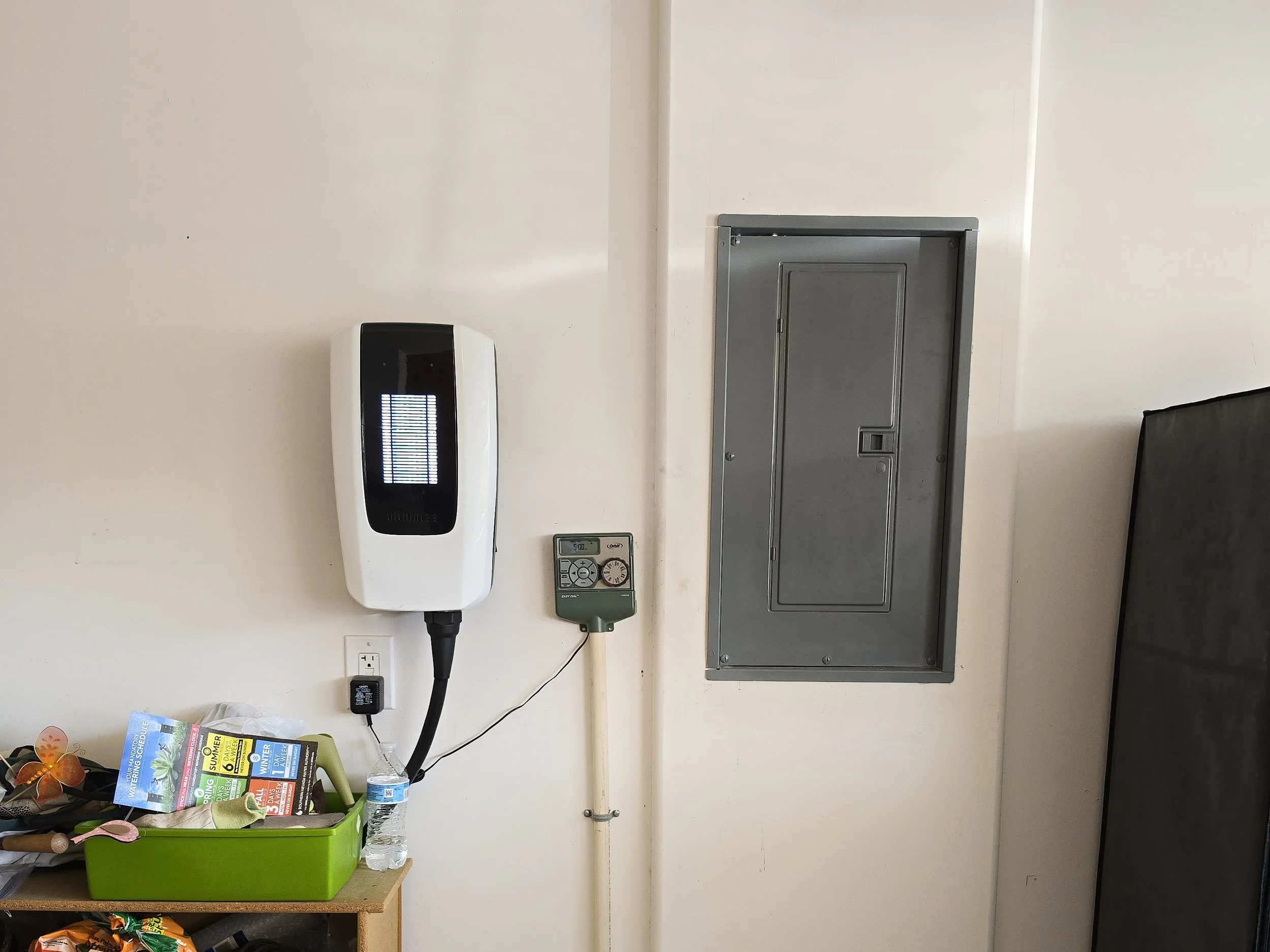
A GM EV Charger
The Future: Vehicle to home backup or bi-directional charging:
Certain EVs like the F150 Lightning, Tesla Cybertruck and Model Y performance already have the ability to be used to power your home if the power goes out just by being plugged in.
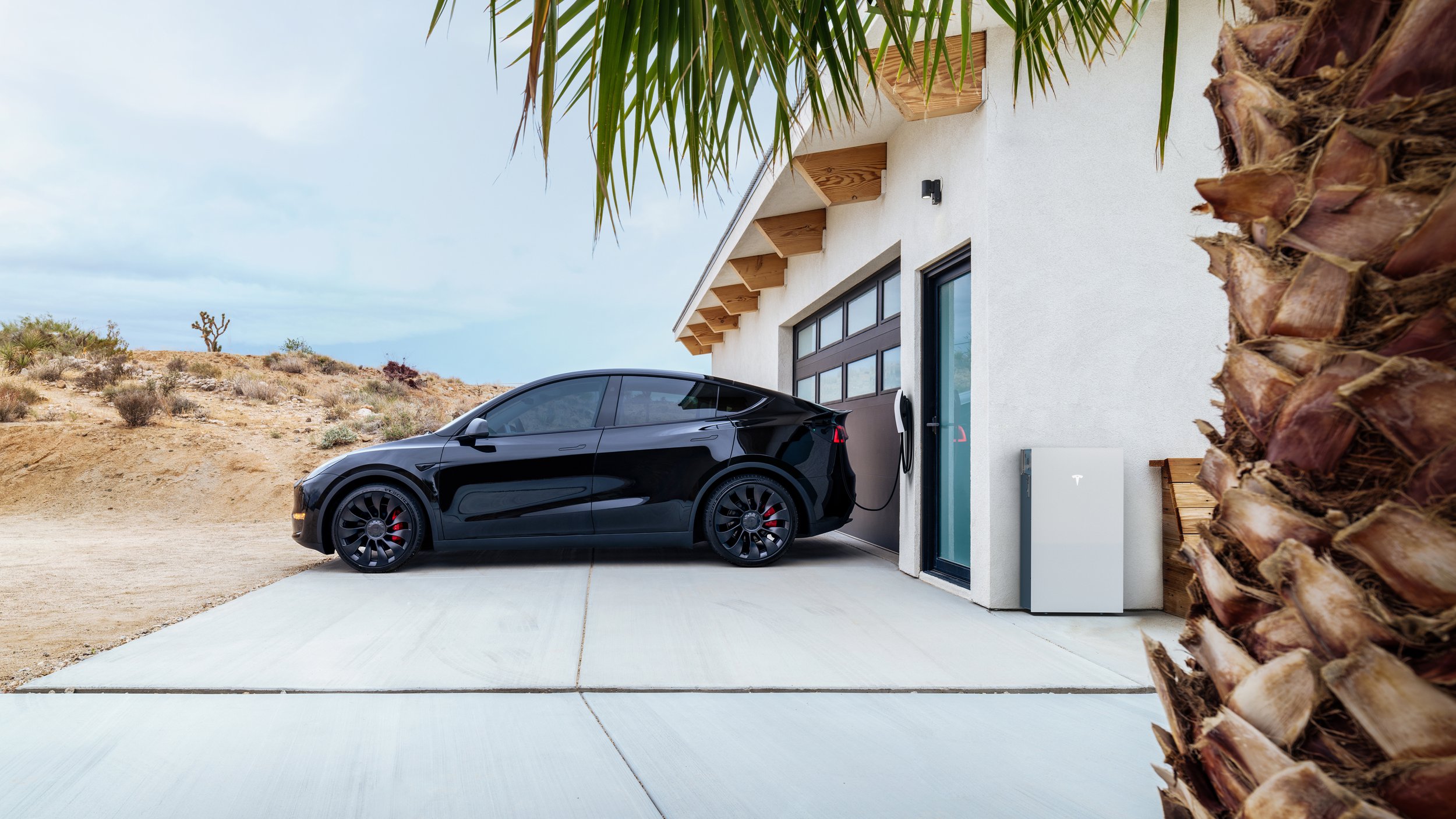
But there’s also a new more universal bi-directional EV charger coming out from Enphase where most EVs will be able to be plugged in and if the power goes out, you can keep the lights on. Check out this video of it in action and join our waitlist for being able to get one once they’re available.
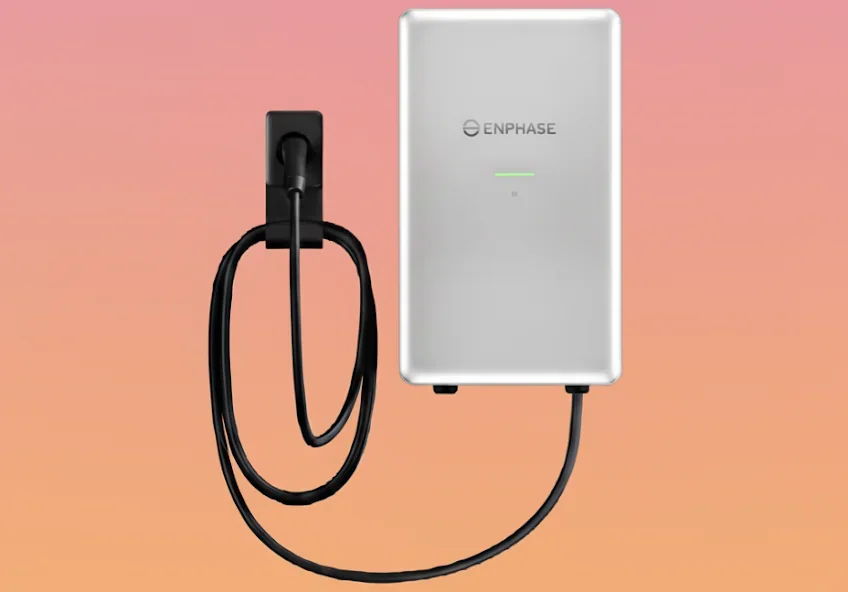
The Enphase bi-directional charger will be coming in 2026 and be more universal across EVs